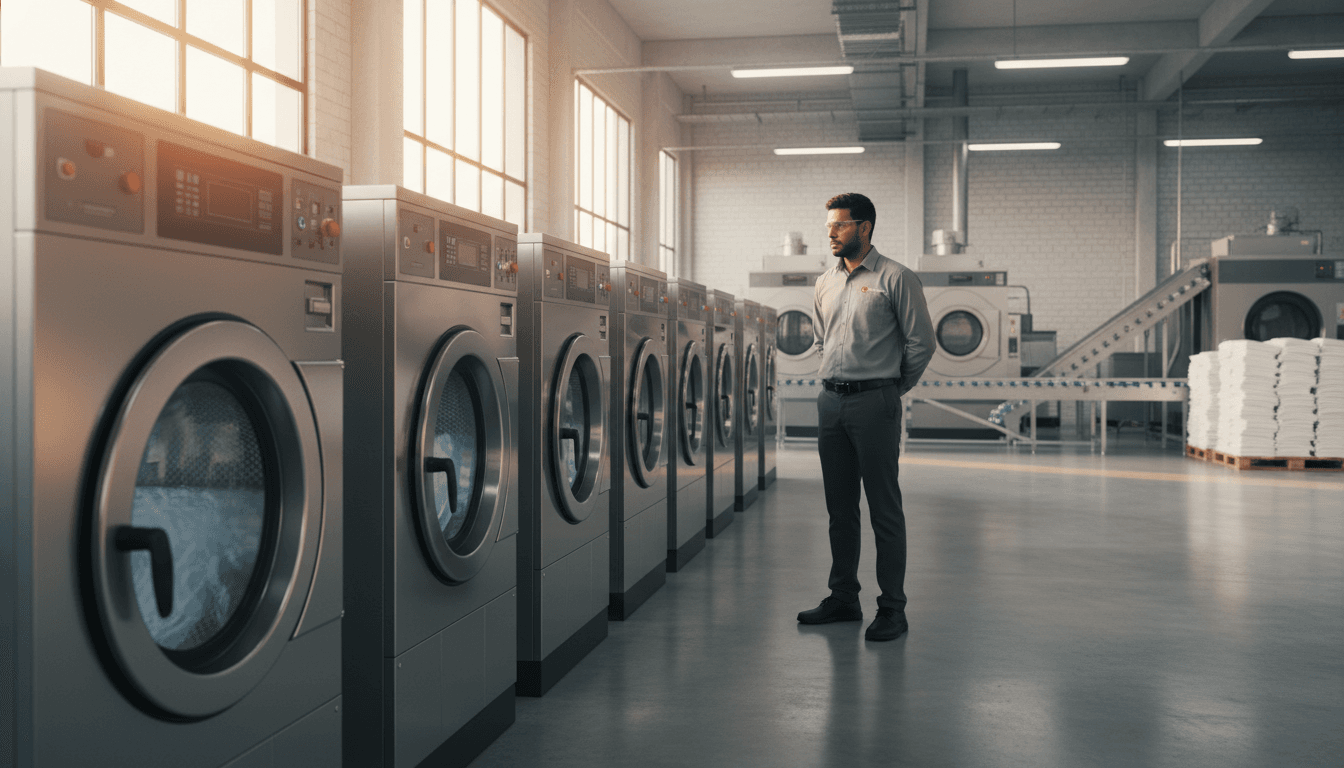
The Lifeline of Healthcare: Why Hospital Laundry Matters
In the complex ecosystem of a multispeciality hospital, the laundry department is often overlooked, yet it is a critical frontline in the battle against healthcare-associated infections (HAIs). Every bedsheet, every patient gown, and every surgical drape carries the potential to either heal or harm. Professional laundry management is not merely about aesthetics; it is about biological safety and patient outcomes. A minor lapse in hygiene protocols can lead to the spread of dangerous pathogens like MRSA or C. difficile, which can compromise an entire ward and extend patient recovery times.
Sunshine Equipments has spent decades partnering with India's leading medical institutions to design laundry facilities that meet the highest international standards. We understand that hospital laundry requires a different level of engineering than commercial or residential systems. Our focus is on absolute sanitization, process transparency, and long-term reliability. We provide hoteliers and hospital administrators with the tools they need to achieve NABH (National Accreditation Board for Hospitals) and JCI (Joint Commission International) standards, ensuring that their facility remains a beacon of safety for patients and staff alike.
As healthcare demand grows in India, the pressure on hospital infrastructure increases. High patient turnover requires a rapid, yet 100 percent reliable, laundry cycle. Manual processes and substandard equipment are no longer sufficient in an era of antibiotic-resistant bacteria. This guide explores the advanced technologies and strategic workflows that transform a hospital laundry room into a high-tech sanitization center. From barrier washers to RFID tracking, we provide a blueprint for medical-grade operational excellence.
Beyond safety, the economics of hospital laundry are significant. With hundreds or thousands of beds in a single facility, utility costs and linen replacement cycles can heavily impact the hospital's budget. Our machines are designed to optimize every drop of water and every unit of electricity, providing a massive return on investment over their 20-plus year lifespan. We help you transition from a reactive "wash and fold" mindset to a proactive, data-driven "hygiene management" strategy.
Infection Control Standards
Infection control is the primary objective of any medical laundry operation. The goal is to produce "hygienically clean" textiles, which are defined as being free of pathogens in sufficient numbers to cause human disease. This is achieved through a combination of mechanical action, thermal energy, and chemical agents. The process must be consistent, verifiable, and strictly audited to ensure that every single item that leaves the laundry room is safe for patient contact.
The World Health Organization (WHO) and local Indian authorities like NABH prescribe clear guidelines for the handling and laundering of healthcare textiles. These include strict temperature thresholds—typically reaching 71 degrees Celsius (160 degrees Fahrenheit) for a minimum of 25 minutes—combined with high-performance detergents and disinfectants. Our equipment includes automated data logging that tracks every wash cycle, providing a digital paper trail that can be presented during inspections. This transparency is vital for maintaining the accreditation that patients trust.
Cross-contamination is the greatest risk in a laundry facility. It occurs when pathogens from soiled linens find a path to clean linens, often through shared air, equipment, or staff handling. To mitigate this, we advocate for a 100 percent physical separation between the 'soiled' side and the 'clean' side of the laundry room. This is not just a policy; it must be a structural reality. We help hospitals design these zones to ensure that no air or personnel can move freely between them without undergoing decontamination protocols.
Finally, the final stages of the process are as important as the wash. Clean linens must be dried, folded, and packaged in a way that prevents re-contamination during transport to the wards. Our finishing equipment includes high-heat ironers that provide an additional layer of thermal disinfection while creating a smooth finish that is easier to inspect for stains. Every step of the Sunshine workflow is designed with a "hygiene-first" philosophy, protecting your patients at every touchpoint.
Barrier Washing Systems
The barrier washer is the gold standard for healthcare laundry. Unlike a standard commercial machine, a barrier washer features a pass-through design with doors on both sides. This machine is installed directly into a physical wall that bisects the laundry facility. Soiled linens are loaded from the 'dirty' side, and once the sanitization cycle is complete, the clean linens are retrieved from the opposite door on the 'clean' side. This design creates a permanent, undeniable barrier against cross-contamination.
The engineering behind a barrier washer is incredibly precise. The two doors are electronically interlocked, meaning they can never be open at the same time. This prevents dirty air from the soiled room from ever reaching the clean room. The machines also feature high-speed extraction capabilities, reaching G-forces of 350 or more, which reduces drying time and energy consumption. Our barrier washers are available in capacities ranging from 20kg to 120kg per cycle, making them suitable for everything from boutique clinics to massive government medical colleges.
Hygiene control is integrated into the machine's software. The controller monitors water temperature, chemical dosing, and cycle duration in real-time. If any of these parameters fall below the safety threshold, the machine will not allow the 'clean side' door to open, alerting the manager to a potential sanitization failure. This "safety lock" ensures that no piece of contaminated linen can ever accidentally make its way back into the hospital environment.
In the Indian context, where space in older hospital buildings can be limited, we specialize in custom installations of barrier systems. We work with your engineering team to modify existing layouts or design new ones that integrate these machines seamlessly. A barrier washer is not just a piece of equipment; it is the cornerstone of your hospital's hygienic integrity.
Pathogen Management: MRSA & VRE
Hospital laundry is a reservoir for a wide range of dangerous microorganisms. Methicillin-resistant Staphylococcus aureus (MRSA) and Vancomycin-resistant Enterococci (VRE) are two of the most concerning antibiotic-resistant bacteria found in healthcare settings. These pathogens can persist on patient bedding for days or even weeks if not properly addressed. Our laundering protocols are specifically designed to eliminate these threats through a multi-pronged attack of high heat and oxidative chemistry.
Clostridioides difficile (C. diff) spores represent an even greater challenge, as they are highly resistant to standard disinfectants and can survive in the environment for months. Removing C. diff requires a combination of high-temperature washing and heavy-duty mechanical action to physically dislodge the spores from the fabric fibers. Our industrial machines use specialized drum patterns and beaters that provide excellent agitation without damaging the linen, ensuring a 99.99 percent reduction in bacterial counts.
We also address the risks posed by bloodborne pathogens like Hepatitis B and HIV. Linens contaminated with blood or bodily fluids require an initial sluice cycle to safely remove organic matter before the main disinfection wash begins. Our machines feature programmable sluice settings that use focused water jets to handle biohazards securely, protecting the laundry staff from accidental exposure during the sorting phase.
Chemical synergy plays a vital role in pathogen management. We partner with leading chemical suppliers to provide hospital-grade detergents that work in sync with our machine's thermal cycles. By using precise dosing, we ensure that every fiber of the linen is exposed to the correct concentration of disinfectant for the correct amount of time. This level of precision is virtually impossible to achieve with manual pouring or domestic-grade machines.
Unidirectional Workflow Design
The efficiency and safety of a hospital laundry depend heavily on its internal logistics. We advocate for a "unidirectional workflow" where linens move in a straight line from the entrance of the soiled ward to the exit of the clean ward. There should be zero backtracking and zero intersection points between dirty and clean paths. This linear progression is the most effective way to manage the massive daily volume of a multispeciality hospital while maintaining strict hygiene.
The process begins at the bedside. We provide hospitals with color-coded, leak-proof bags that allow housekeeping staff to pre-sort linens into categories like 'Infected,' 'General Ward,' and 'Operating Theatre.' These bags are transported in covered carts to the soiled entrance of the laundry. By minimizing the "agitation" of soiled linens during transport, we prevent the release of contaminated aerosols into the hospital corridors—a critical safety measure that many older facilities overlook.
Inside the laundry, the linens move from the soiled intake to the barrier washers, then out into the clean finishing area. Here, they are dried, ironed, and immediately packed into sterile plastic wraps. This "packing at the point of finish" ensures that when a sheet arrives at the patient's room, it is as clean as it was the moment it left the ironer. We use modular folding tables and mobile staging racks to keep the clean area organized and clutter-free, reducing the risk of accidental floor contact.
Staff movement is also strictly regulated. Employees working in the soiled area must use a separate entrance and locker room than those in the clean area. They should never cross the "barrier line" during their shift. We provide layout designs that include separate staff corridors and break rooms to prevent any possibility of human-mediated contamination. A well-designed workflow is as much about people management as it is about machine placement.
Thermal & Chemical Sanitization
Sanitization in healthcare is a science that relies on the "Sinner's Circle"—four variables that must be perfectly balanced: Time, Temperature, Mechanical Action, and Chemistry. If one is reduced, the others must increase to compensate. However, in a hospital, we never compromise on temperature or time, as these are the primary killers of pathogens. Our machines are built with redundant temperature sensors and high-wattage heating elements that can quickly reach and maintain the 71 degree Celsius threshold required for thermal disinfection.
Chemical sanitization adds a second layer of defense. For linens that cannot withstand high temperatures, such as some modern synthetic fabrics or delicate uniforms, we use hospital-grade disinfectants like peracetic acid or chlorine-based bleaches. Our multi-port chemical pumps inject these agents at the precise moment when the water pH and temperature are optimized for their effectiveness. This ensures that we kill the bacteria without causing "chemical burn" or premature wear on your linen assets.
Ozone laundry technology is another advanced option we offer. Ozone is a powerful natural oxidant that works at ambient temperatures, providing deep disinfection and odor removal while significantly reducing your utility costs. Many Indian hospitals are adopting Ozone as part of their sustainability initiatives, as it allows them to achieve medical-grade sanitization while using 30 percent less hot water. Our machines are fully compatible with Ozone generators and include the necessary stainless steel fittings to resist the gas's corrosive properties.
Validation is the final step. We provide hospitals with automated reporting tools that track the temperature and chemical levels of every load. This data can be exported to your Hospital Information System (HIS) or printed for manual audit logs. Being able to prove that a specific batch of surgical gowns reached the required sanitization profile is a powerful tool for risk management and quality assurance.
Medical Grade Water Softening
The quality of your water is the foundation of your laundry success. In many parts of India, groundwater contains high levels of hardness (calcium and magnesium) and iron. Hard water is a disaster for hospital laundry. It reacts with detergents to form "soap scum" that traps bacteria and stains within the fabric fibers. It also makes linens feel stiff and abrasive to the patient's skin, leading to discomfort and even bedsores in long-stay patients.
We provide professional-grade water softening and filtration systems as part of our laundry setup. By reducing water hardness to below 20 ppm, we allow your detergents to work at peak efficiency. Soft water also means you can reduce your chemical usage by up to 40 percent, as the detergent doesn't have to "fight" the minerals in the water. For a large hospital, this saving in chemical costs alone can reach thousands of rupees every month.
Iron removal is equally critical. Iron in the water causes permanent orange or gray stains on white linens, making them look dirty even when they are sanitized. For a medical institution, this is a major aesthetic failure that erodes patient trust. Our specialized iron-removal filters ensure that your whites stay bright and pristine, reflecting the pure hygienic standards of your hospital. We conduct a detailed water analysis before every installation to tailor the treatment system to your specific needs.
Finally, we consider the impact of water on your machines. Hard water results in scale buildup on heating elements and inside pipes, leading to frequent breakdowns and skyrocketing energy bills. By protecting your machines with soft water, you extend their lifespan and ensure that your laundry room remains operational 24/7. Water quality is not just about the linen; it is about protecting your entire capital investment.
PPE and Staff Safety Protocols
The safety of the laundry staff is as important as the safety of the patients. Workers in the soiled area are at risk of exposure to biohazards, needle sticks, and respiratory pathogens. We help hospitals implement comprehensive Personal Protective Equipment (PPE) protocols, including the use of heavy-duty gloves, fluid-resistant gowns, face shields, and N95 masks. Hand hygiene stations must be conveniently located at every entrance and exit of the laundry zones.
Ergonomics also plays a massive role in staff safety. Moving large volumes of heavy, wet linens is physically demanding. We design our collection and feeding stations to minimize the need for bending, lifting, and repetitive reaching. Our carts are equipped with high-performance casters that allow them to be moved with minimal effort, even when fully loaded. By caring for the physical well-being of your staff, you reduce absenteeism and improve the overall efficiency of your laundry operation.
Vaccination programs are a mandatory part of staff safety for our healthcare clients. Every laundry worker must be immunized against Hepatitis B and other bloodborne diseases. We provide managers with training modules and safety signage to ensure that a "Safety First" culture permeates the department. We also advise on the installation of emergency eye-wash stations and chemical spill kits in areas where concentrated detergents are stored.
Finally, we focus on psychological safety. The work of a hospital laundry staff is intense and often goes unrecognized. We advocate for clean, well-lit, and properly ventilated workspaces—features that are often missing in older hospital basements. A comfortable environment reduces stress and allows your team to maintain the high level of focus required for consistent sanitization results.
Preserving Medical Textiles
A 300-bed multispeciality hospital can easily have over 5 million rupees invested in linen stock. This includes patient bedding, OT towels, gowns, and uniforms. Protecting this asset from premature wear is a major financial priority. The "chemical stress" of hospital laundering—high heat and aggressive disinfectants—can quickly degrade the fibers, leading to thinning, tearing, and loss of absorbent properties. Our machines are designed to provide a "gentle but deep" clean that preserves the structural integrity of the fabric.
The design of our washer cylinders is a key factor. We use smooth, micro-perforated drums that prevent the linen from being pulled through holes during high-speed extraction. This reduces the risk of "pinhole" damage that is common in low-quality machines. We also offer automated cooling phases after the wash and dry cycles to prevent "thermal shock," which can make fibers brittle. Properly laundered linens will last for 150 to 200 wash cycles, whereas poorly processed ones might fail after just 80.
Proper rinsing is another secret to longevity. Residual alkalinity in the fabric can cause "chemical browning" in the ironer and make the linen feel rough to the touch. Our multi-stage rinse cycles ensure that all detergent traces are removed and the fabric pH is returned to a skin-neutral level (pH 5.5 to 6.5). This not only extends the life of the sheet but also significantly reduces the risk of guest skin irritation.
Linen rotation is the final part of the longevity strategy. We recommend the "Five Par" system: one in use, one in the closet, one in the wash, and two in storage / emergency reserve. This ensures that no individual sheet is being washed more than once every two or three days, giving the fibers time to rest and regain their natural moisture level. We assist our clients in calculating and managing these inventory levels to optimize their textile budget.
RFID in Healthcare Linen Management
In a large hospital environment, "linen loss" can reach up to 20 percent per year. Items are often misplaced in the wards, accidentally discarded with waste, or lost in transport. Radio Frequency Identification (RFID) technology eliminates this problem by providing total visibility into your linen inventory. Every sheet and towel is embedded with a small, flexible, heat-resistant RFID chip that can survive hundreds of wash and iron cycles.
RFID allows for automated, hands-free counting. Instead of staff spending hours counting soiled linens by hand—a significant hygiene risk—they can simply push a cart through an RFID gate. The system scans all 200 items in the cart in less than a second, recording the count with 100 percent accuracy. This saves labor, improves hygiene by reducing the "touch points" of soiled linen, and provides an immediate digital receipt for the laundry manager.
The technology also provides invaluable data on linen utilization and lifecycle. You can see which wards are using the most linen and why. You can track exactly how many times each item has been washed. When a sheet reaches its 150th wash, the system can flag it for inspection, ensuring that you retire linens before they become a liability to the guest experience. This is "Smart Linen Management" that moves beyond guesswork.
For room management, RFID can speed up the "clean linen" delivery process. Housekeeping staff can use handheld scanners to take inventory of their floor closets in seconds, automatically generating a "top-up" request to the laundry. This ensuring that no ward ever runs out of critical stock, even during an emergency influx of patients. RFID is the ultimate tool for a modern, tech-enabled medical institution.
Eco-Friendly Hospital Laundry
Sustainability in healthcare is no longer optional. Hospitals are massive consumers of water and energy, and the laundry room is often the single largest contributor to this footprint. Sunshine Equipments focuses on "Green Sanitization" technologies that allow you to meet the strictest hygiene standards while reducing your environmental impact. A sustainable laundry room is not only better for the planet; it is significantly cheaper to operate.
Water recovery systems are a cornerstone of our green initiative. Our machines can be equipped with recycling tanks that capture water from the final rinse stages to be reused in the initial wash stages of the next cycle. This can reduce total water consumption by as much as 40 percent. For a hospital in a water-scarce region like Chennai or Rajasthan, this is a strategic necessity that ensures operational continuity regardless of local water supply issues.
Energy efficiency is achieved through thermal insulation and motor optimization. We use high-performance cladding on our dryers and ironers to keep the heat inside the machines, reducing the workload of your boiler and your air conditioning systems. Our motors use Frequency Inverters (VFDs) that adjust power usage based on the load weight, preventing the massive energy spikes associated with traditional industrial machinery. Energy savings of 25 percent are common when upgrading from legacy equipment to Sunshine systems.
We also advocate for biodegradable, non-toxic chemistry. We work with chemical partners who offer phosphate-free detergents and oxygen-based bleaches that are safer for the local wastewater systems. By reducing the "chemical load" of your laundry discharge, you simplify your effluent treatment (ETP) processes and improve your hospital's environmental rating. Sustainability is a powerful message to show your community that you care about their health beyond the hospital walls.
NABH & NQAS Compliance in India
For hospitals in India, accreditation from NABH (National Accreditation Board for Hospitals) and NQAS (National Quality Assurance Standards) is the ultimate proof of quality. The laundry department is a major focus of these audits, particularly under the "Infection Control" and "Facility Management" chapters. Our equipment and layout designs are specifically tailored to help you pass these rigorous inspections with ease.
NABH auditors look for process documentation and environmental control. They will check your temperature logs, your separate zones for clean and dirty linens, and your staff's adherence to PPE protocols. Our PLC controllers generate all the necessary reports automatically, giving you a comprehensive audit file at the touch of a button. We also provide standard operating procedure (SOP) templates that you can adapt to your specific facility, saving you hundreds of hours of administrative work.
The physical design of our barrier washers is a "tick-box" win for NABH compliance. It is the clearest way to demonstrate that you have a structural solution for preventing cross-contamination. We also ensure that our installations meet local labor and safety laws, including proper grounding of electrical components and clearly marked fire exits. Sunshine Equipments is more than a vendor; we are your compliance partner in the Indian healthcare landscape.
Finally, we assist with NQAS certification for government and public sector hospitals. These standards focus heavily on "Public Health Outcomes" and utility efficiency. Our high-performance water and energy-saving technologies directly contribute to the "Green Hospital" scores under NQAS. We have successfully implemented these systems in several major AIIMS and state government multispeciality hospitals across the country.
Heavy-Duty Equipment Specs
When selecting equipment for a hospital, durability is paramount. These machines must run 16 to 24 hours a day, 365 days a year. A breakdown in the hospital laundry is not just an inconvenience; it can stop surgeries and delay patient admissions. Our equipment is built with "Industrial Resilience" as the core philosophy. This means using thicker stainless steel, oversized bearings, and industrial-grade motors from trusted global brands like Siemens and ABB.
Our Barrier Washers feature heavy-duty suspension systems that handle the extreme out-of-balance forces generated by high-speed extraction. They use a "soft-mount" technology that eliminates the need for expensive concrete foundations, allowing them to be installed on any floor of the building. This flexibility is a major advantage during hospital renovations. The user interfaces are designed to be "operator-proof" with multi-language support and intuitive icons.
Our Industrial Dryers use axial airflow and moisture-sensing technology to dry large loads of towels and gowns in half the time of standard units. They feature "Fire Suppression Systems" standard—a critical safety feature in a high-lint environment like a hospital. The internal cylinders are made of polished stainless steel to prevent snagging of delicate patient garments.
Our Flatwork Ironers are available in widths up to 3.3 meters, allowing you to press king-sized bedsheets and large surgical drapes in a single pass. They use a heated-chest design that provides uniform pressure and temperature, ensuring a consistent glass-like finish every time. We also offer automated feeding and folding systems that can be integrated with these ironers to create a fully high-performance finishing line.
Financial ROI for Healthcare
The initial cost of high-grade industrial laundry equipment is an investment that many hospital boards scrutinize. However, when you look at the Total Cost of Ownership (TCO) over 10 to 20 years, the financial case for quality becomes undeniable. We provide complete ROI analysis for our clients, looking at three major areas of saving: Utilities, Labor, and Linen Replacement.
Utilities are the largest ongoing expense. By upgrading from legacy machines to Sunshine's high-efficiency barrier washers and moisture-sensing dryers, hospitals typically save between 25 percent and 45 percent on their monthly water and energy bills. For a 500-bed hospital, this can translate to savings of 1 lakh to 2 lakh rupees per month. The equipment literally pays for itself in under three years through utility savings alone.
Labor productivity is also greatly enhanced. An automated folding system can do the work of four staff members, allowing you to reallocate labor to higher-value clinical support roles. Our machines' faster cycle times also mean you can process more kilograms of laundry per hour, reducing the need for double-shifts or expensive overtime. We help you model these labor savings to show the true impact on your bottom line.
Finally, the "hidden" saving is in linen replacement. By using soft water and precise chemical dosing, we extend the life of your linen by 30 percent or more. If your hospital spends 20 lakhs a year on new linen, a 30 percent extension in its life saves you 6 lakhs annually. When you add all these factors together, a premium Sunshine laundry system is one of the most financially sound investments a hospital can make.
Frequently Asked Questions
What is a barrier washer and why is it essential for hospitals?
A barrier washer is a pass-through machine with doors on both sides. It is installed in a wall that physical separates 'dirty' and 'clean' zones. This is essential for preventing cross-contamination from airborne pathogens and ensures that soiled linens never touch clean ones.
How does Sunshine Equipment meet NABH laundry standards?
Our systems provide automated thermal disinfection logging, precise temperature control (71°C for 25 mins or equivalent), and chemical dosing validation. These features directly assist hospitals in passing NABH audits for infection control and facility management.
Can these machines handle sterilization or just sanitization?
Laundering is a sanitization process that renders textiles 'hygienically clean.' While it significantly reduces microbial load to safe levels, it is not the same as sterilization (autoclaving). However, our thermal protocols are designed to eliminate the vast majority of healthcare-associated pathogens.
How do you handle linens contaminated with biohazards?
We recommend a pre-wash sluicing cycle using 0.5 percent bleaching solution for 30 minutes. Our machines include specialized 'Sluice' programs that handle blood, pus, and fecal matter securely before moving to the main disinfection wash.
What is the benefit of Ozone laundry systems in hospitals?
Ozone is a powerful natural oxidant that provides deep disinfection even at lower temperatures. It is highly effective against viruses and bacteria, reduces chemical usage by 30 percent, and extends the life of patient linens by being gentler than chlorine bleach.
How do we track thousand of pieces of linen in a large hospital?
We integrate heat-resistant RFID chips into the hems of all linens. This allows for automated counting during collection and delivery, real-time inventory tracking, and provides data on the number of wash cycles each item has undergone.
What utility connections are needed for a 50kg barrier washer?
Generally, a 50kg unit requires a 2 inch water inlet, a 3 inch drain, a high-voltage electrical feed (415V/3Ph), and often a steam connection for rapid heating. We provide detailed rough-in drawings for your contractors during the planning phase.
Do you offer Annual Maintenance Contracts (AMC) for hospitals?
Yes, we provide specialized Healthcare AMCs that include priority 24-hour response times, regular calibration of temperature sensors, and quarterly training for your laundry staff on hygiene protocols.
Is your equipment compatible with medical grade chemicals?
Absolutely. Our wash drums and outer tubs are made from high-grade 304 or 316L stainless steel, which is resistant to hospital detergents, peracetic acid, and chlorine-based bleaches used in healthcare settings.
Can we visit an existing hospital installation to see the machines?
We have hundreds of installations across India in major multispeciality hospitals. Contact our sales team to arrange a site visit at a facility near your location.
Healthcare Industry Feedback
"The implementation of the barrier washer system was pivotal for our JCI accreditation. Sunshine Equipment provided not just the machines but the technical expertise to design a perfect unidirectional workflow. Their support during the audit was invaluable."
DRDirector of Operations, Multispeciality Hospital Chain
"Reliability is everything in a medical environment. We've been running our Sunshine machines for six years now, nearly 18 hours a day, and the performance has been flawless. Their preventative maintenance program keeps our engineering team stress-free."
AKChief Engineer, Apollo Health City
"The level of technical detail Sunshine brings to the table is unmatched. Their understanding of MRSA and VRE pathogen management through thermal cycles gave our clinical team complete confidence in the new laundry wing."
ICInfection Control Officer, Fortis Healthcare
"Utility efficiency was our target, and Sunshine delivered. We've seen a 35 percent reduction in water consumption after switching to their recycling-enabled barrier washers. It's a win for both our budget and our NQAS rating."
FMFacility Manager, Manipal Hospitals
"Linen longevity has improved dramatically since we implemented Sunshine's automated chemical dosing systems. Our patient sheets are lasting 40 percent longer, which has significantly lowered our annual replacement costs."
PHPurchase Head, Government Medical College
"The RFID integration changed how we manage our inventory. We no longer have 'linen loss' disputes between wards, and our staff spends zero time on manual counting. It is the smartest investment we've made this year."
HNHead of Nursing, Max Super Speciality Hospital
"Designing a laundry for a specialized oncology center requires extreme care. Sunshine's unidirectional workflow design ensured that we maintain sterile path integrity from intake to packaging. Truly a professional partner."
VSCEO, Regional Oncology Institute